Master the ancient instrument that has sung the poetry of Central Asia for over a thousand years. From beginner to virtuoso — your journey begins here.
1000+
Years of History
All
Skill Levels Welcome
Online
Video Lessons
Live
Sessions Available
About Rababstan
Where Ancient Strings Meet Modern Teaching
The rabab is not merely an instrument — it is the voice of a civilisation. At Rababstan, we bridge centuries of musical tradition with accessible, structured lessons designed for the modern student. Whether you've never held a rabab or seek to deepen a lifelong practice, our teaching honours the heritage while meeting you where you are.
Our lessons cover technique, tuning, classical ragas, Afghan folk repertoire, and the spiritual dimension that makes the rabab unlike any other instrument in the world.
Rababstan
What You'll Learn
A Complete Journey Through the Rabab
🎵
Foundations
Posture, tuning, basic strokes and understanding the instrument's anatomy.
🎶
Classical Ragas
Traditional scales and melodic frameworks rooted in Persian and Indian classical music.
🏔️
Folk Repertoire
Pashtun and Afghan folk songs that define the living tradition of the rabab.
✨
Advanced Technique
Ornamentation, improvisation, complex rhythmic patterns and performance craft.
Heritage & Tradition
The History of the Rabab
An instrument that has carried the songs, prayers and poems of Central Asia across more than a millennium.
Ancient
Origins in Central Asia
The rabab's origins trace back to ancient Central Asia, with roots among nomadic peoples of what is now Afghanistan, Pakistan and parts of Iran. Early versions of the instrument appear in Persian manuscripts and were known across the Silk Road trading routes. Its name derives from the Arabic word meaning "to sing" or "to play," and versions of the instrument spread westward into Arab musical culture and eastward into South Asia.
10th C.
Sufi Devotional Music
By the 10th century, the rabab had become deeply intertwined with Sufi spiritual practice. The great poet Rumi wrote extensively about music as a path to the divine, and the rabab was among the instruments played in sama — the devotional ceremony of whirling and chanting. The rabab was believed to voice the soul's longing for reunion with the divine, and its mournful, resonant tone became inseparable from Persian mystical poetry.
Medieval
The Afghan Rabab Takes Shape
The distinctive double-chambered Afghan rabab, with its characteristic deep gourd-like body and sympathetic strings, crystallised during the medieval period. Luthiers in Kabul, Kandahar and the surrounding regions developed a unique form of the instrument: a carved mulberry-wood body, a skin-covered resonator, gut melody strings, and a set of steel sympathetic strings that vibrate in response, giving the instrument its shimmering overtone quality.
16th C.
At the Mughal Court
The Mughal emperors of the Indian subcontinent were devoted patrons of music, and the Afghan rabab found a celebrated place at the Mughal court. The musician Miyan Tansen, legendary as the greatest vocalist in Indian classical music, is said to have played the rabab. It was during this period that the instrument began to blend with Indian classical traditions, influencing the development of the sarod — the rabab's most direct descendant.
16th–19th C.
The Rabab in Sikh Sacred Music
One of the most profound chapters in the rabab's spiritual journey is its central role in the birth of Sikhism. Guru Nanak Dev Ji, the founder of the Sikh faith, travelled across South Asia, Central Asia and the Middle East singing his divine compositions — known as Gurbani — accompanied by his devoted companion Bhai Mardana, who played the rabab. Bhai Mardana, a Muslim rabab player from Raipur, became inseparable from Guru Nanak's mission, and together they used the instrument to convey the message of oneness, love and devotion to thousands of listeners regardless of caste or creed.
The rabab thus became one of the first instruments through which the sacred hymns of the Guru Granth Sahib — the eternal scripture of Sikhism — were sung and heard. Gurbani compositions in the Guru Granth Sahib specifically mention the rabab, and the tradition of playing the instrument in Gurdwara kirtan (devotional music) continued for generations. Bhai Mardana's lineage preserved this tradition, and his descendants served as rababi musicians in Sikh shrines for over two centuries. The rabab's role in Sikh devotional music stands as a powerful testament to its unique capacity to unite communities across religious, cultural and geographic boundaries — its strings carrying not just melody, but the living breath of spiritual inquiry.
19th C.
Pashtun Poetry & Folk Tradition
Through the 19th century, the rabab became the signature instrument of Pashtun musical culture. Roaming bards known as dandán would play the rabab while reciting ghazals and epic poetry across Afghanistan and the North-West Frontier. The instrument became bound to the concept of honour, hospitality and storytelling — values central to Pashtun identity. Every landay, lullaby and war song found its voice through the rabab.
Today
A Living Instrument for the World
The Afghan rabab today stands at a fascinating crossroads: deeply traditional yet increasingly global. Virtuosos like Homayun Sakhi have introduced it to world music audiences from Carnegie Hall to the BBC Proms. At the same time, teachers and communities worldwide are working to preserve the classical traditions and ensure the next generation inherits the full depth of the instrument's heritage. Rababstan is proud to be part of that mission.
The Instrument
Anatomy of the Afghan Rabab
The Body
Hand-carved from a single piece of mulberry wood, with a skin membrane stretched across the lower sound chamber. The distinctive double-gourd shape separates melody strings from the sympathetic resonators.
The Strings
Three main melody strings (traditionally gut, now often nylon), three drone strings of steel, and up to 15 sympathetic strings that run beneath the frets, creating the instrument's characteristic shimmering resonance.
The Frets
Moveable gut or nylon frets tied to the neck allow the player to adjust tuning for different scales and ragas — a feature that makes the rabab extraordinarily flexible as a classical and folk instrument.
The Plectrum
The rabab is traditionally played with a small plectrum — a shard of horn or wood — allowing rapid passages and delicate ornamentation. Fingernails are also used to pluck the drone and sympathetic strings.
Images & Moments
Gallery
Glimpses of the rabab in performance, practice and its natural home.
🎸
Performance
Concert at Kabul Cultural Centre2023
🎵
Instrument
Hand-crafted Afghan RababKandahar Luthier
📚
Teaching
Private Lesson SessionStudent Progress
🏔️
Heritage
Mountain Villages of AfghanistanWhere the Music Lives
✨
Craft
The Strings of the RababDetail Study
🎤
Festival
Folk Music FestivalLive Performance
🌙
Tradition
Evening GatheringMusic & Poetry
🎼
Notation
Classical Notation StudyAdvanced Curriculum
Learn at Your Own Pace
Lesson Videos
From first notes to advanced performance — a structured video curriculum for every level.
Learn the timeless art of the rabab from a dedicated instructor committed to preserving its rich heritage. Whether you're a complete beginner or an experienced musician, each lesson is designed to help you build confidence, technique, and a deep connection with the instrument.
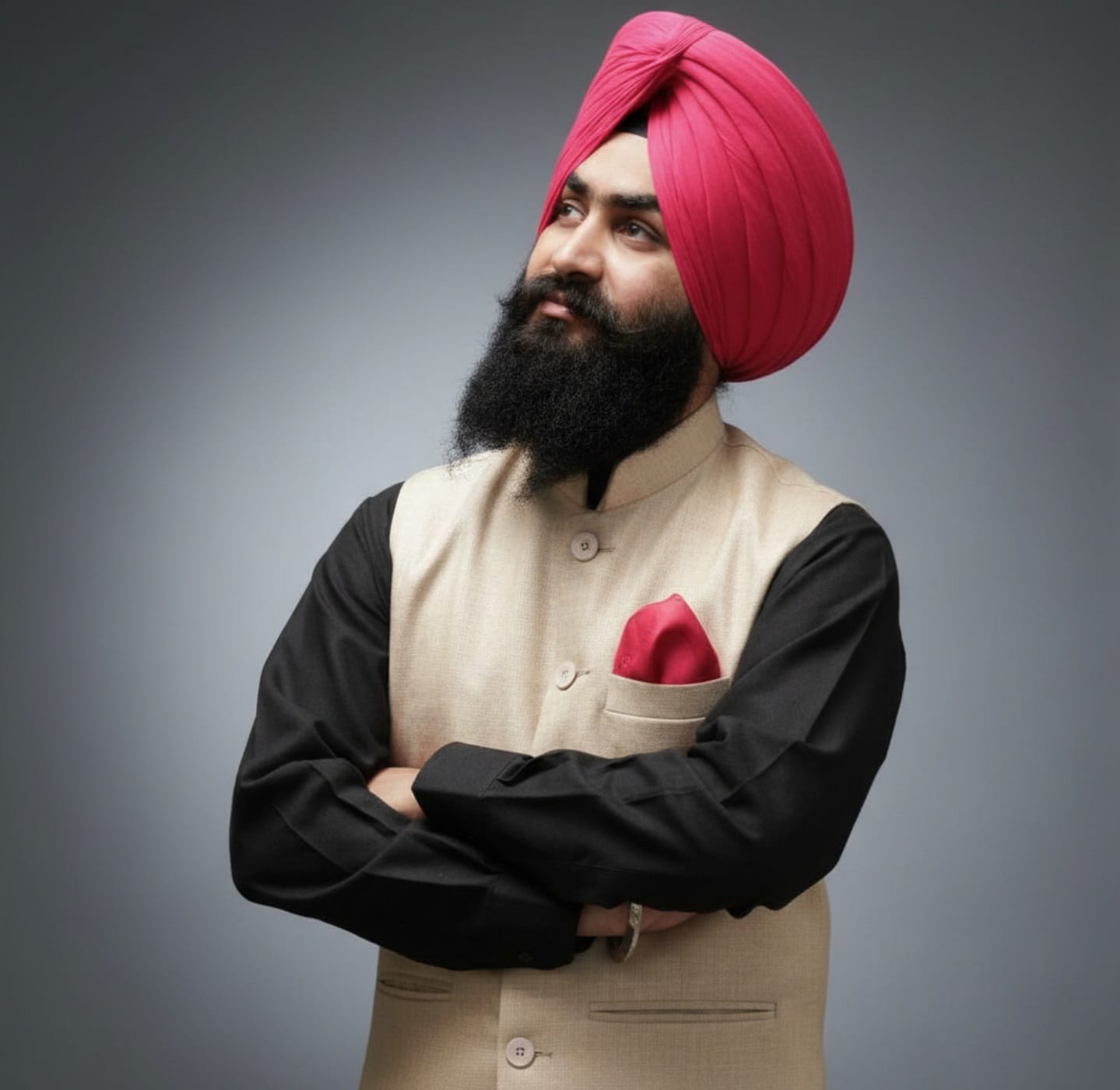
Master Jaspreet Singh
About Instructor
Dedicated to Teaching the Art of Rabab
Master Jaspreet Singh began his musical journey with Hindustani Vocal music under the guidance of Principal Anupama Rattan and Sub. Daljeet Singh. His passion for Indian classical music later led him to the study of Sitar, shaping him into a versatile performer and educator.
He studied Sitar under the legendary Top Grade Sitarist Pandit Manu Seen and Dada Ustad Padma Shri Ustad Shahid Parvez Khan of the Etawah Gharana, whose guidance inspired him to pursue the profound and enriching journey of Indian classical music. He also received training in Layakari and Tabla from Pt. Madhuresh Bhatt of the Banaras Gharana.
Further expanding his musical horizons, he studied the Afghan Rabab under Ustad Mojib Azizi of Herat, Afghanistan, gaining valuable knowledge of the instrument’s rich tradition and its historical connection with Indian classical music.
Master Jaspreet Singh has received numerous national and international recognitions for his performances and is known for his vibrant and soulful interpretation of Ragas. He completed his M.A. and M.Phil. in Music with National Gold Medals from Punjabi University, Patiala, and earned the degree of Sangeet Visharad from Pracheen Kala Kendra, Chandigarh.
As a performer, teacher, and mentor, he imparts training in Sitar, Rabab, Surbahar, Veena, Tabla, Harmonium, Dilruba, and Vocal Music. Through his dedication to performance, education, and preservation of traditional musical heritage, Master Jaspreet Singh continues to inspire students and audiences both in India and abroad.
Get in Touch
Contact Us
Ready to begin your rabab journey? Reach out and we'll guide you to the right lesson path.
Let's Start Your Journey
Whether you're a complete beginner curious about the rabab, an intermediate player wanting to deepen your understanding, or an advanced musician seeking to connect with the classical tradition — we'd love to hear from you.
📧
Emailrababstan@yahoo.com
🎵
LessonsOnline via Zoom / In-person (by arrangement)
🕐
Response TimeWe reply within 24 hours
Send a Message
✉️
Message Sent!
Thank you for reaching out. We'll be in touch within 24 hours to discuss your rabab journey.
 Rababstan